Day 6 in the Faroes
07/01: Birds, bindigarmynstur and Bónus

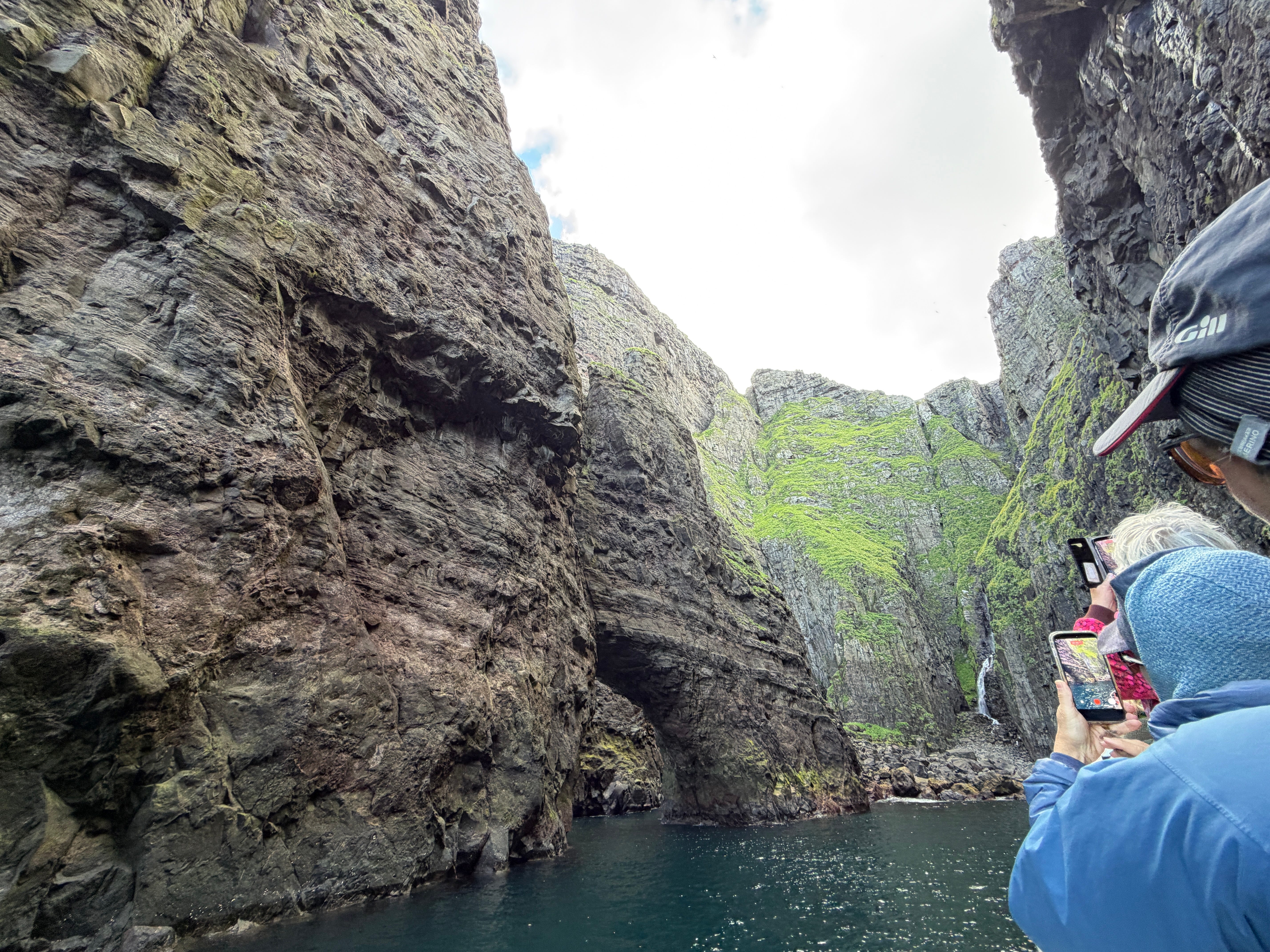
We did the very popular Vestmanna boat tour this morning. Crammed onto the top of a little speedboat, we rocked and rolled out to the famous bird cliffs under blissfully sunny skies. As usual, the scenery was impossibly dreamlike, with 700m-high cliff spires soaring above us.1
There’s something about watching fulmars circling against a craggy backdrop higher than them that removes the scene from time, slowing it down somehow. Almost everything was too far away for my old binoculars to be of much use, but it turns out the bird tour was more about the rocks than the birds anyway. I wish more people had watched the fulmar-mobile through their eyes rather than their phones.
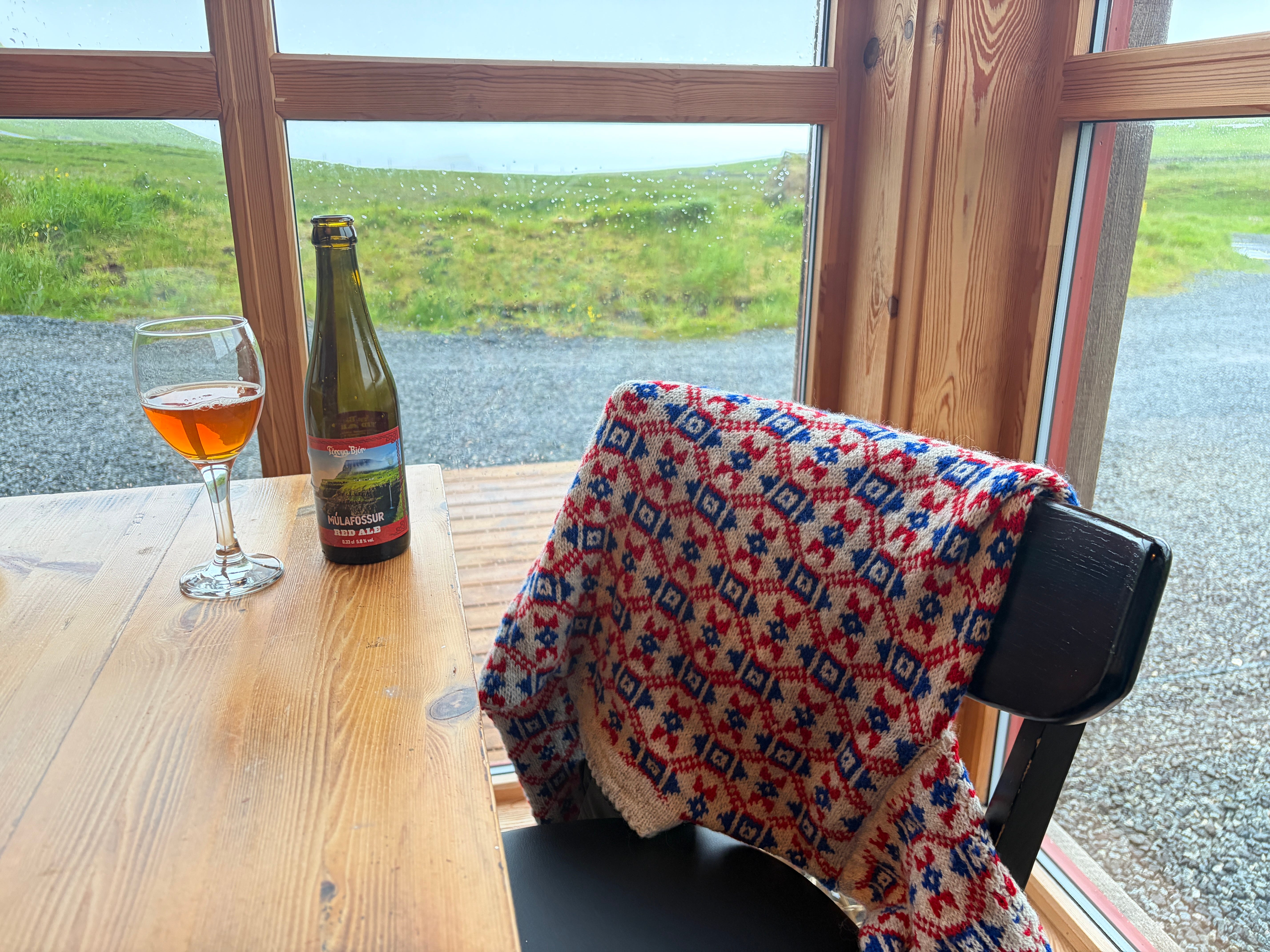
Vestmanna happened to be near Kvívíkknit, the heimavirki with the best knitted sweaters (imho, of course, going by knitting quality, use of natural tones, and reliance on the traditional Faroese patterns). I’m glad we went back, as I found the perfect sweater the moment we walked in—it was new since we’d been there last. Knitted by Palma, the tag told me (Filipina? I immediately wondered—a bit of stalking has since revealed that this is unlikely to be the case). The sweater has a striking red and blue pattern on a cream background; not the traditional greys and browns, true, but reminiscent of Faroese national costume. The pattern isn’t in the early 20th-century pattern book of bindigarmynstur, but was invented by the knitter herself.
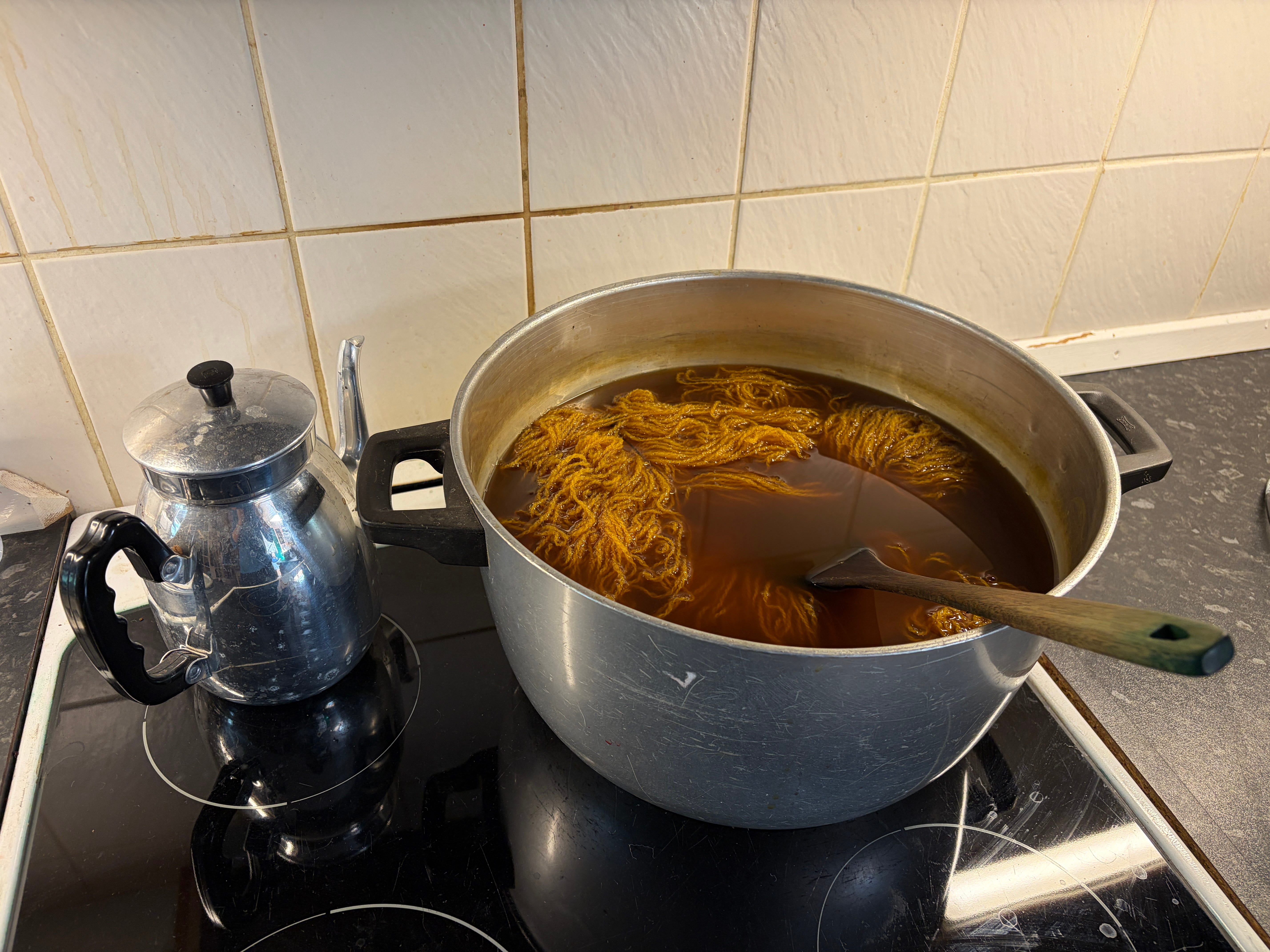
A woman was in the shop dropping off new knits she’d made—I like to think it was Palma—and she overheard me asking why the the blues and reds are so prominent in the traditional dress here. She came over to give the two theories she’d heard: that’s what was left over after the war, or that’s what was historically the most expensive and therefore associated with status. Súsanna, the shop’s owner, was in fact boiling a big pot of yarn with deep yellow onion skins as we spoke; she also dyes with cochineal, rhubarb, indigo, and all kinds of other natural things.
Grocery shopping is always a favorite activity for my family whenever we’re abroad, so we decided to check out the larger Bonus in Tórshavn. It was a bit of a revelation; in addition to the customary yarn aisle and a much large produce section than usual, we found a whole side of local salmon for not a huge amount of money for our dinner. We cooked it with seasonings involving the local angelica salt I procured from the village, and it was quite wonderful.
The evening ended with a walk to a lookout point in the village, which had something of the edge of the world like everywhere here. A golden shaft of sunlight illuminated the right-angled mountaintop above us (it’s often completely invisible in the clouds). More daredevil puffins were nesting in front of us, doing their adorable little dance. In the drystone wall-rimmed fields behind us, we could see a man in his rain-repellent Faroese sweater training a sheep dog, their movements in perfect concert.


The tallest mountain in the Faroes is only 800-something meters high.