Day 8 in the Faroes
07/03: How to Train Your Climate

We were meant to start the day by going over to Koltur, one of the Faroes’ uninhabited islands, on a little rib boat for a morning hike. However, the trip was cancelled (as boats here so often are). Alfie and I had been getting a little bit antsy about the lack of history and museums on our trip, so we were happy to start our day in Kirkjubøur instead—especially given the somewhat ceaseless rain today.
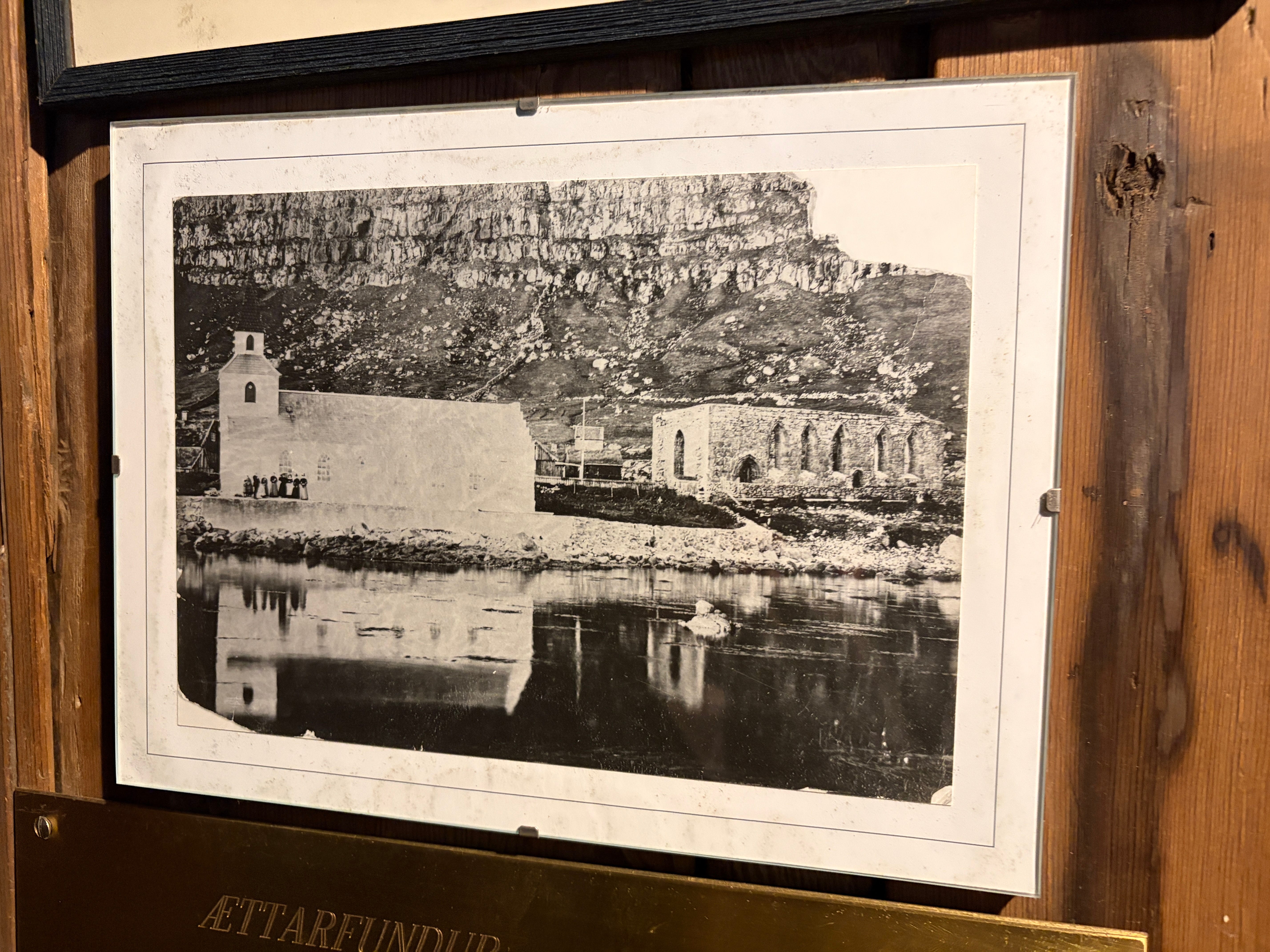
Kirkjubøur is a fascinating historical site, arguably most important in the Faroes. It’s home to the islands’ first and only cathedral (the Faroes had its own diocese from 1111 to 1538). Now roofless, it sits beside a medieval parish church—heavily altered over the years but still in use—and the farmhouse that was once the bishop’s residence. What was once a raised site is now right on the water; the surrounding village was wiped out in a storm in the early 17th century. The beautiful bench-ends in the National Museum came from here (via a long enforced sojourn in Copenhagen, of course).
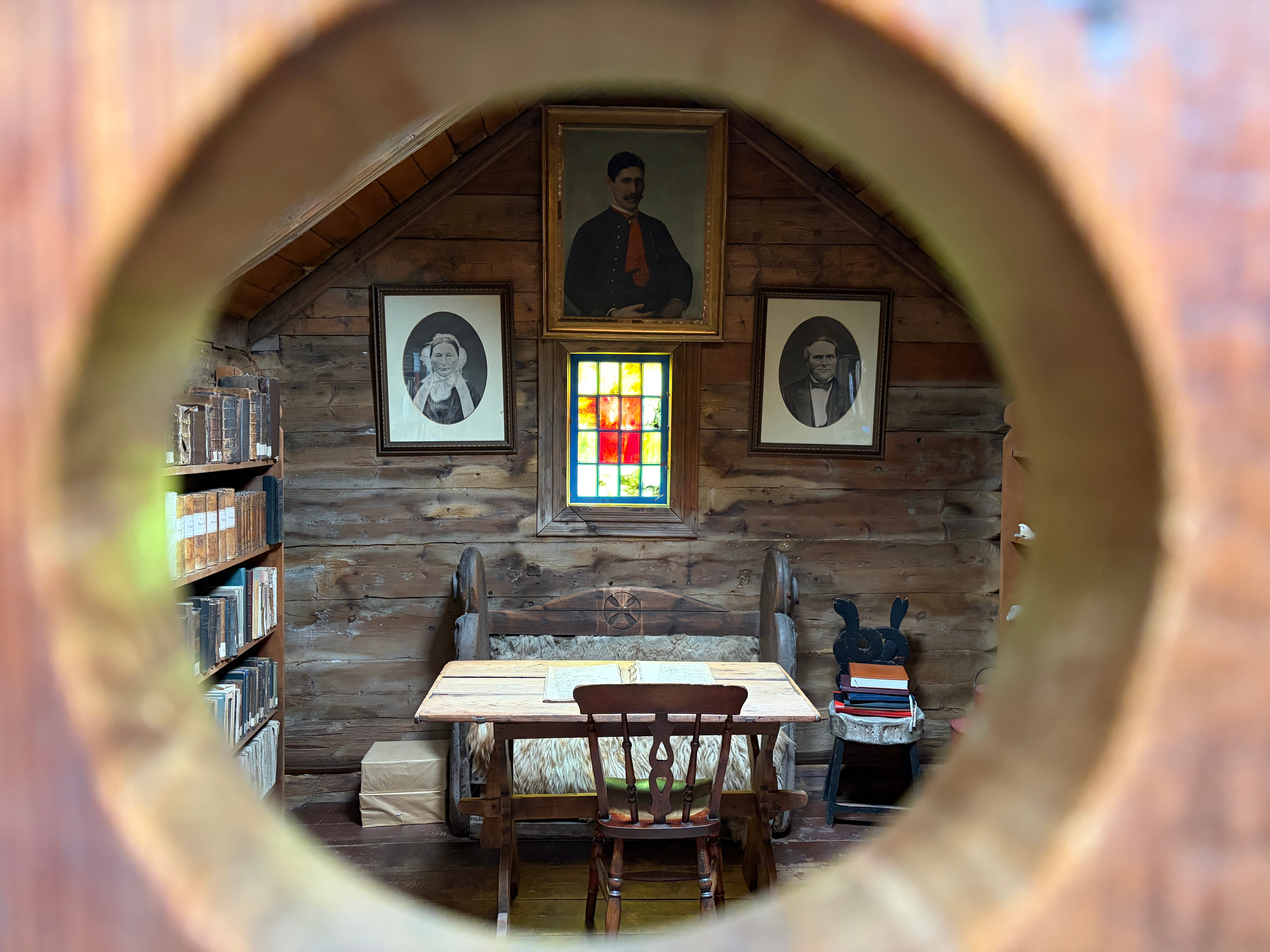
The farmhouse has been inhabited by the same family since the Reformation. It’s known as Roykstovan, after the “smoke room” around the hearth that formed the core of these old farmhouses. You can visit some of the house’s core rooms, including that once smoke-filled living space and the bishop’s old office. The whole place is deliciously scented with centuries of meaty woodsmoke; I was half-hoping they’d offer me an ale and a bowl of stew upon entering.
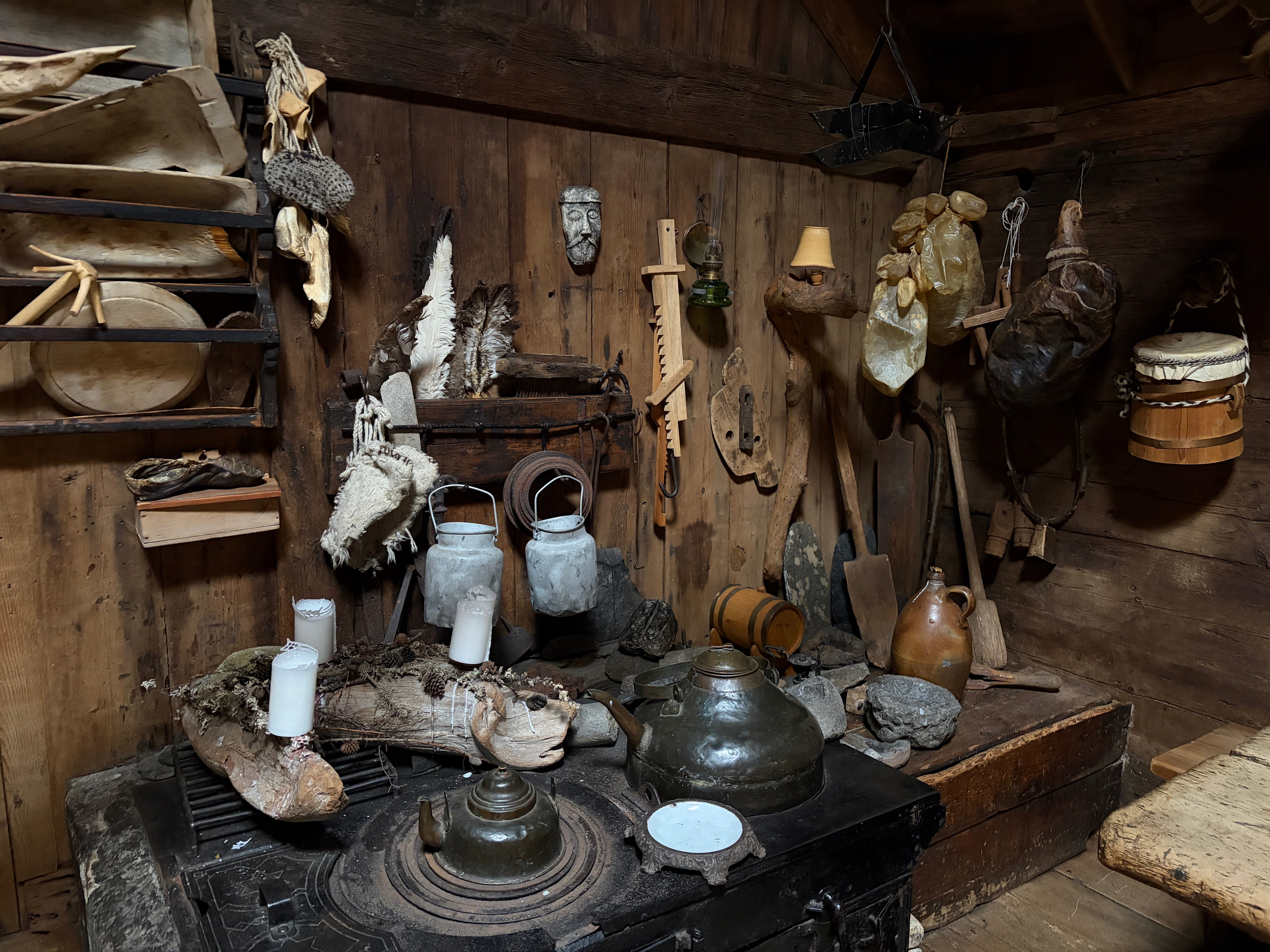
Unfortunately, the site doesn’t offer much for the 150DKK entry (that’s over 20€) charged beyond access to the building: there is no interpretation whatsoever available, not even a map or flyer. Alfie and I did enjoy recalling or guessing what the various objects piled in the corners of the rooms would have been used for back in the day—from birds’ wings used for sweeping the hearth to the ballerina-like laced shoes worn by Faroese fishermen until surprisingly recently—but a lot of visitors would have been completely lost and annoyed (and they were, judging by the guest book entries). I think they should charge less or do some actual museology.
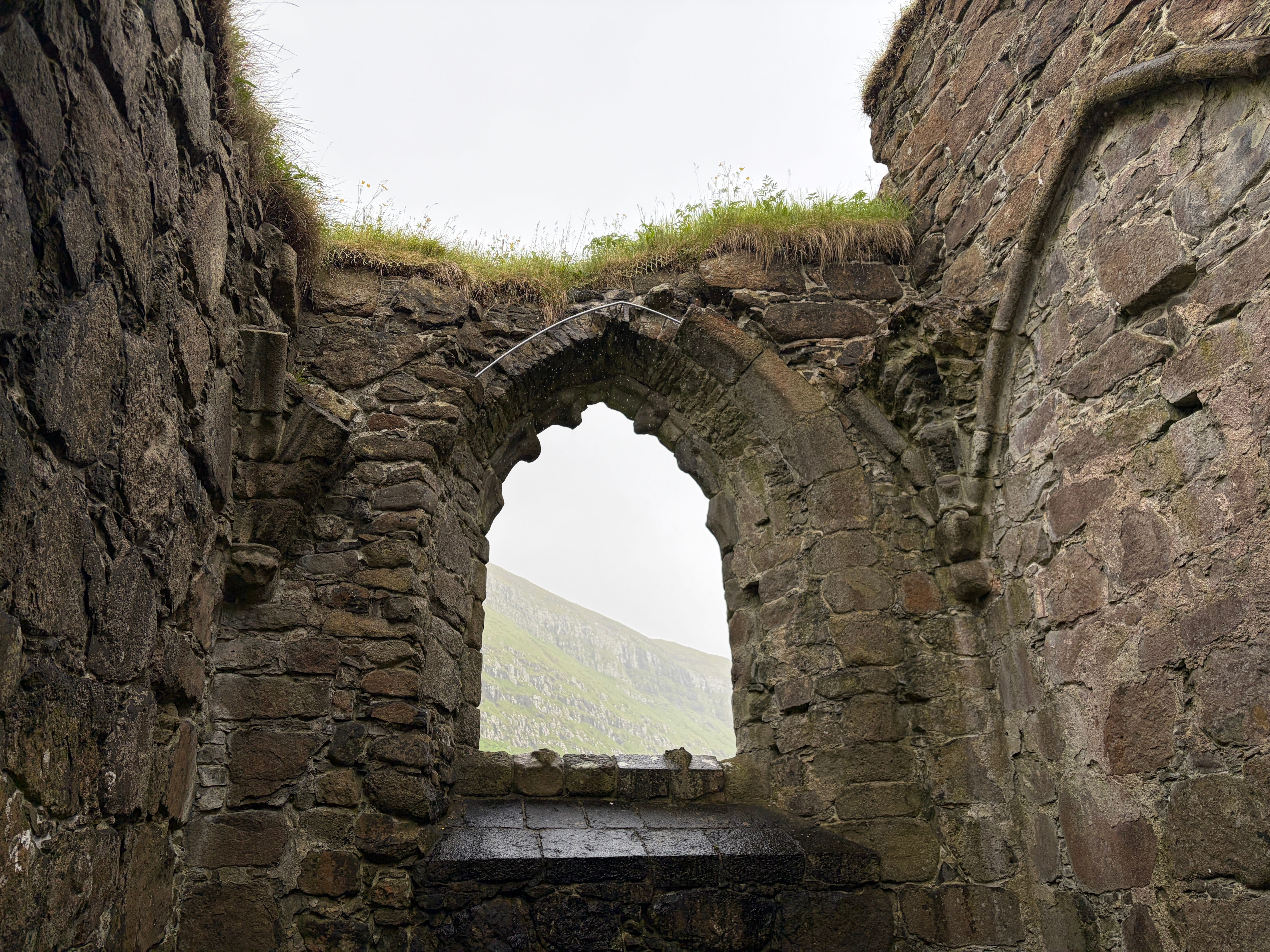
Fortunately, the roofless shell of St Magnus’ Cathedral outside is plenty haunting and mysterious even without interpretation. With the surrounding hills framed by the arched windows and the waves crashing outside, it’s a space out of time. For some reason, they were mowing around the cathedral (what about using all those sheep?), so the rain-heavy air was perfumed with cut grass, chamomile and angelica.
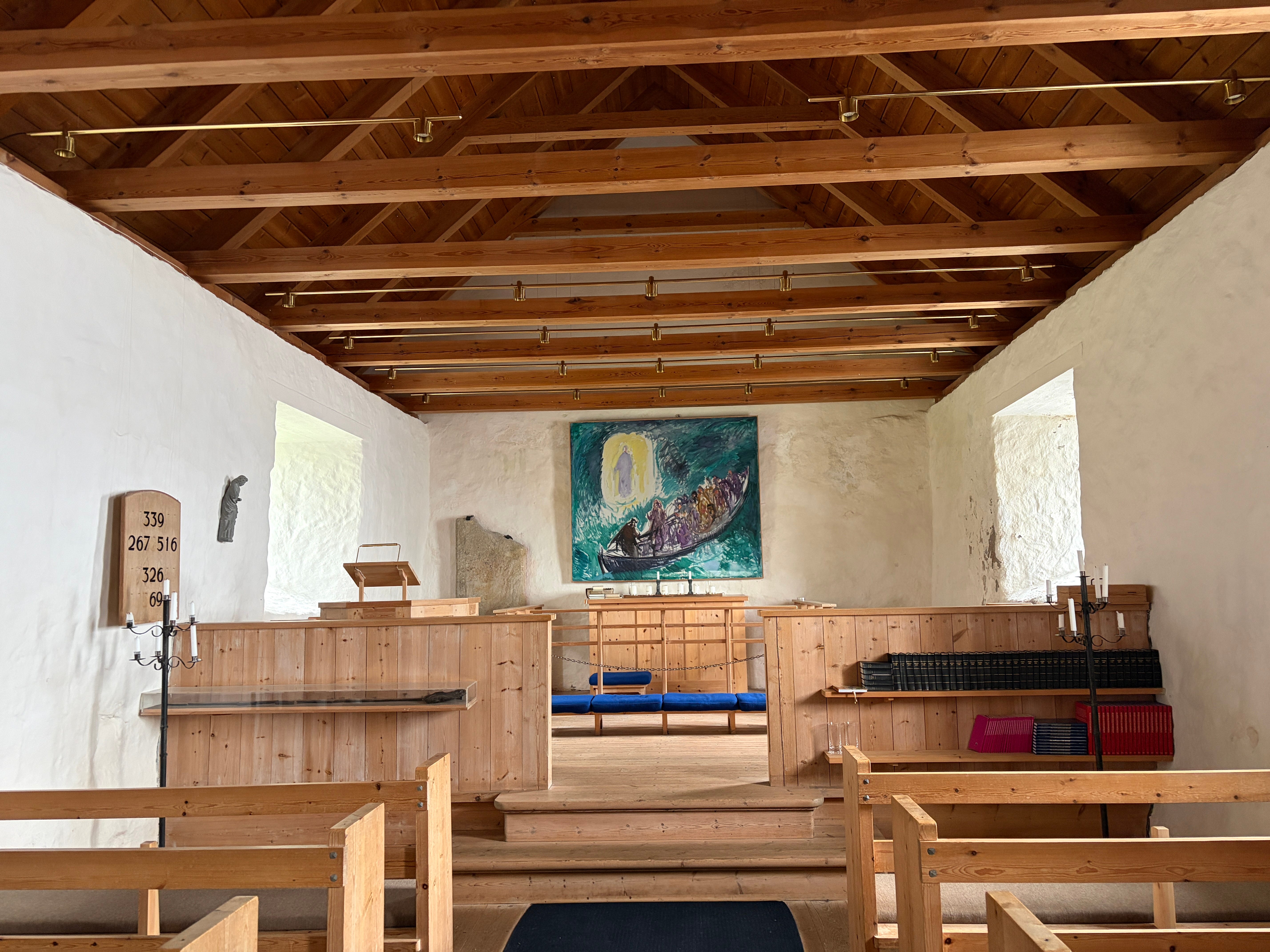
The thick white-washed walls of the Olavskirkjan next door enclose a preternaturally still, boat-like wood-framed chamber. It’s just as peaceful and sweet-smelling, this time from wood-polish. The church is from 1250, but the interior was kitted out with a new wooden roof, benches etc in the 1960s. The altarpiece by Sámal Joensen-Mikines, showing Christ walking on the water towards a Faroese-style fishing boat, is the second modern altar painting Alfie and I can remember really enjoying, after Ivanka Demchuk’s in St Nicholas’ Church in Granada.
After Kirkjobøur, with the weather still decidedly moody, we headed into Tórshavn. Our National Museum tickets from a few days ago included entry to another old farmhouse, Hoyvíksgarður, this time complete with helpful docent, audioguide and maps. Built in 1812, it once belonged to a wealthy farmer. You can tell because it’s mostly made of wood, which had to brought from Norway, rather than stone.
It’s presented today as it might have been in the 1920s, complete with outbuildings for feeding cows, storing peat, drying meat and fish, and all such sundry activities. Amazingly, the roykstova with its chimney-less central hearth still formed the heart of the home when the last family moved out in the 1980s.
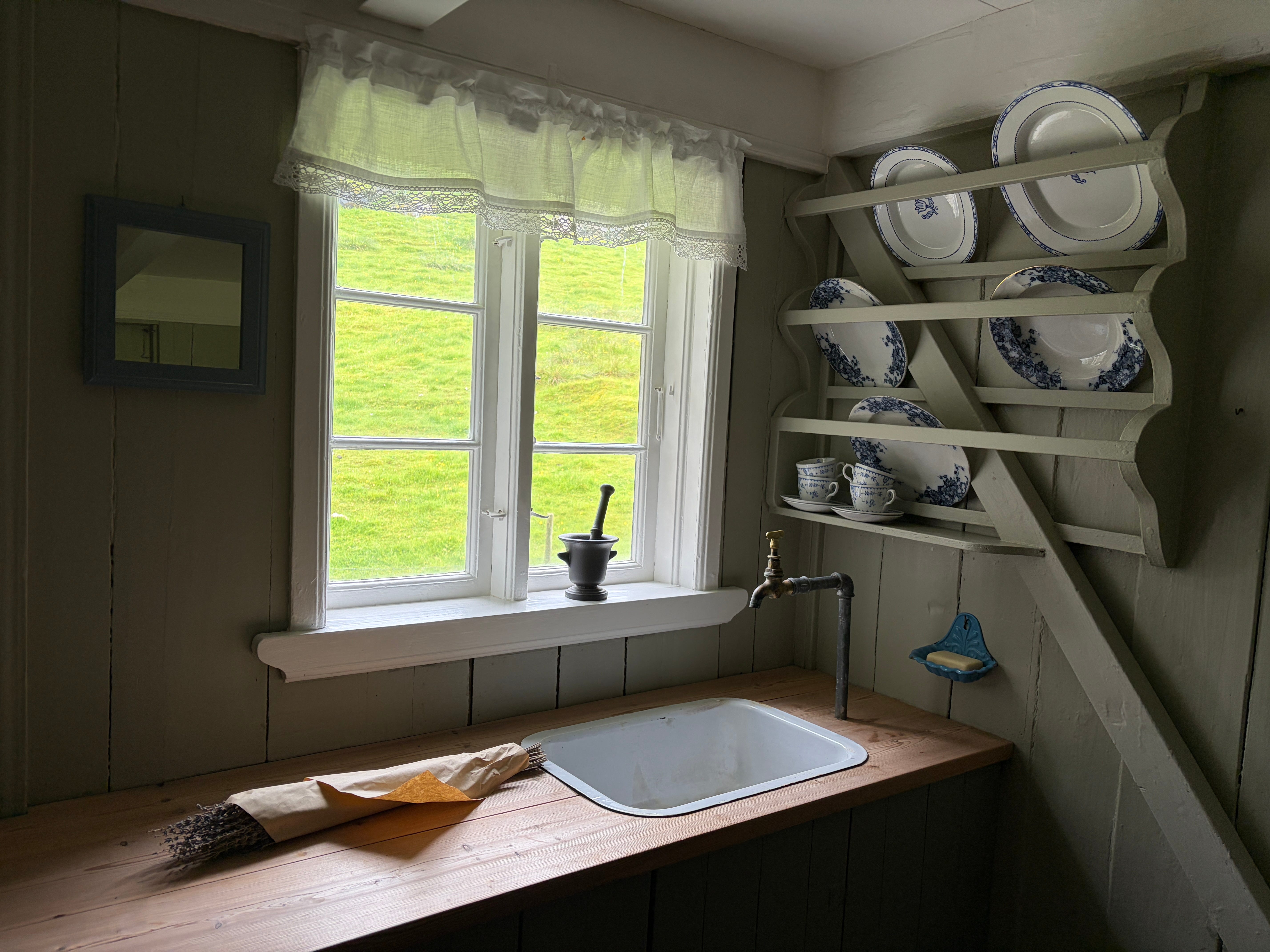
I particularly enjoyed the kitchen in the late-19th-century extension—a very Fortnum & Mason-coded space. From the window, you had a view of the gardens with huddled trees impossibly angled by the wind, moss-covered stones, and gentle smatterings of low pink flowers. I could imagine myself, rather romantically to be sure, darning my socks in the cosy sitting-room with its plush velvet settee and lace-trimmed curtains.
We then had a wander around Tórshavn. We hadn’t yet been into most of its shops, everything having been closed on Sunday when we were there last. Highlights included a lithography workshop overlooking the harbor, the sole modern sourdough bakery in the Faroes (we purchased a good half-meter of rye bread), and Tutl, a music shop and record label that sells and produces only music by Faroese artists. I was happy to discover that the Faroese folk band I’d found on Spotify and been playing during car rides, Spælimenninir (“the fiddlers”), was prominently featured.
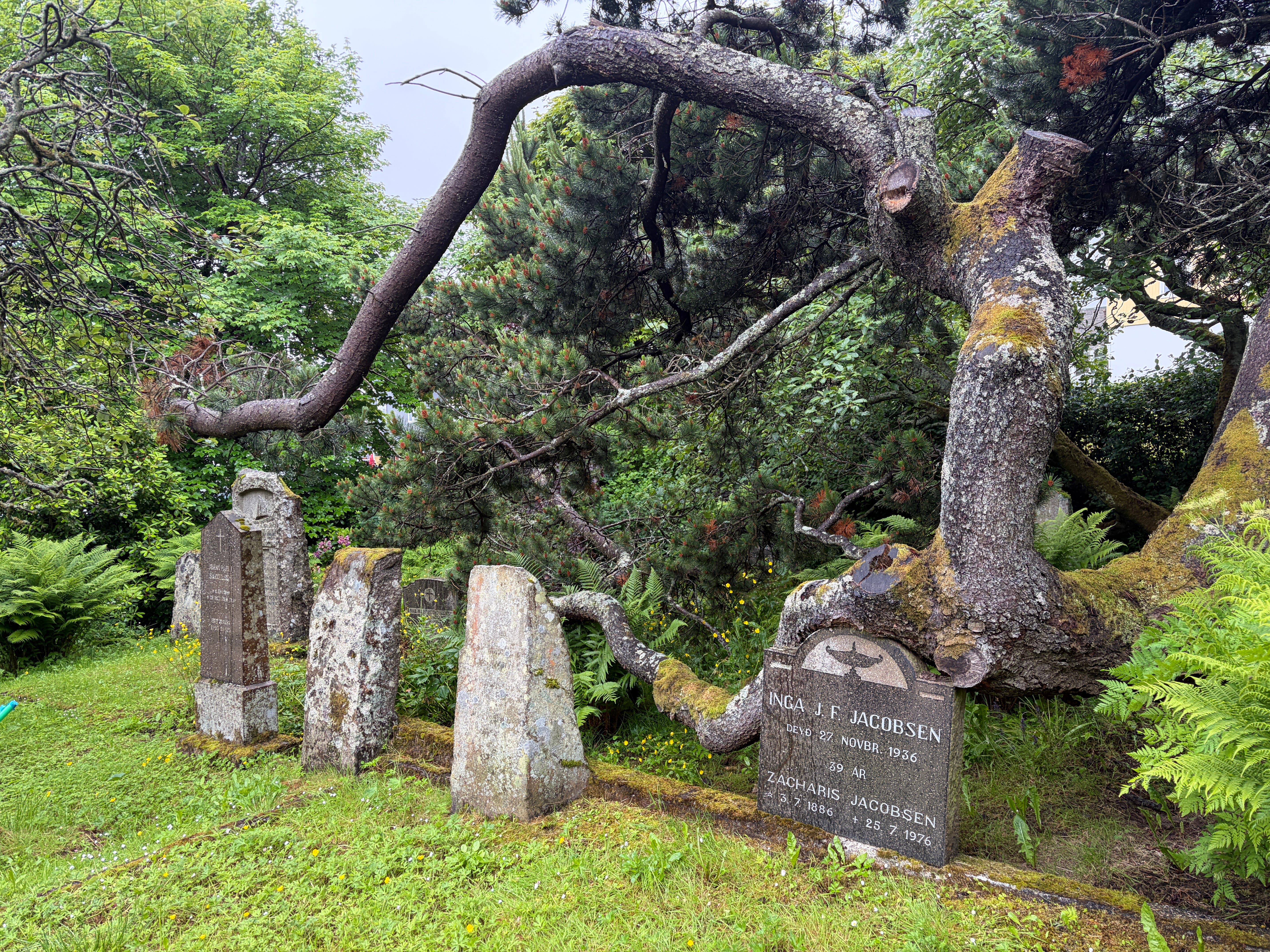
Before driving back home to Gásadalur, we walked through the local graveyard, or kirkjugarður. It was stuffed to the brim with all manner of trees—a rarity on these sheep-denuded isles—including a huge evergreen resting its heavy boughs on the final resting place of Inga & Zacharias Jacobsen. Then, home to watch the weather and the whimbrels with tea-then-wine in hand.