Guide to Venice in superlatives
Proudly inexhaustive

Best time to go
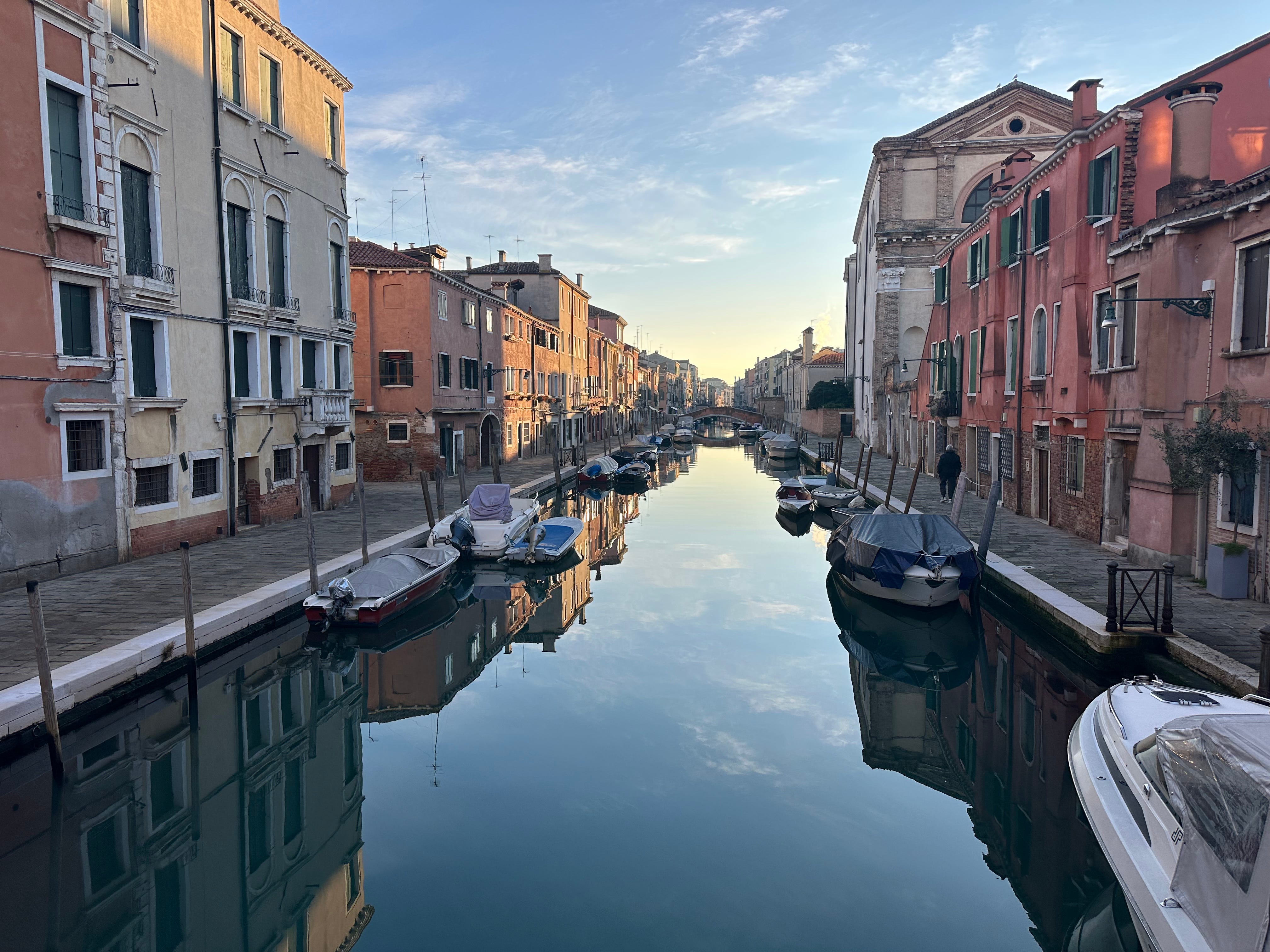
I think a lot about the weekend I spent in Venice this January. That month zwischen den Jahren really is the time to visit, after the rush of Christmas but before the famous carnival. You cannot avoid feeling like a tourist in Venice, but January gives you a glimpse at normalcy—and at any time, there are so many gems to be found, so many side streets to explore.
My first hint that I’d hit the right season was that most of the restaurants and bars I wanted to try were closed. Lots of places taking a month or more off indicates it’s not worth them staying open during that time. Believe it or not, we were able to get into (almost?) all the food and drinks establishments listed below without booking, and we waited in hardly any lines.
I should say that while quite frigid, the weather was brilliantly sunny the entire time we were there. I actually quite like how the shorter daylight of winter keeps your sightseeing window naturally constrained; you can go back to your hotel early and, FOMO-free, curl up with your book and an herbal tea to rest up for another day tomorrow. No, the hotel did not provide herbal tea; yes, I always travel with my own teabags.
Best neighborhood to stay in
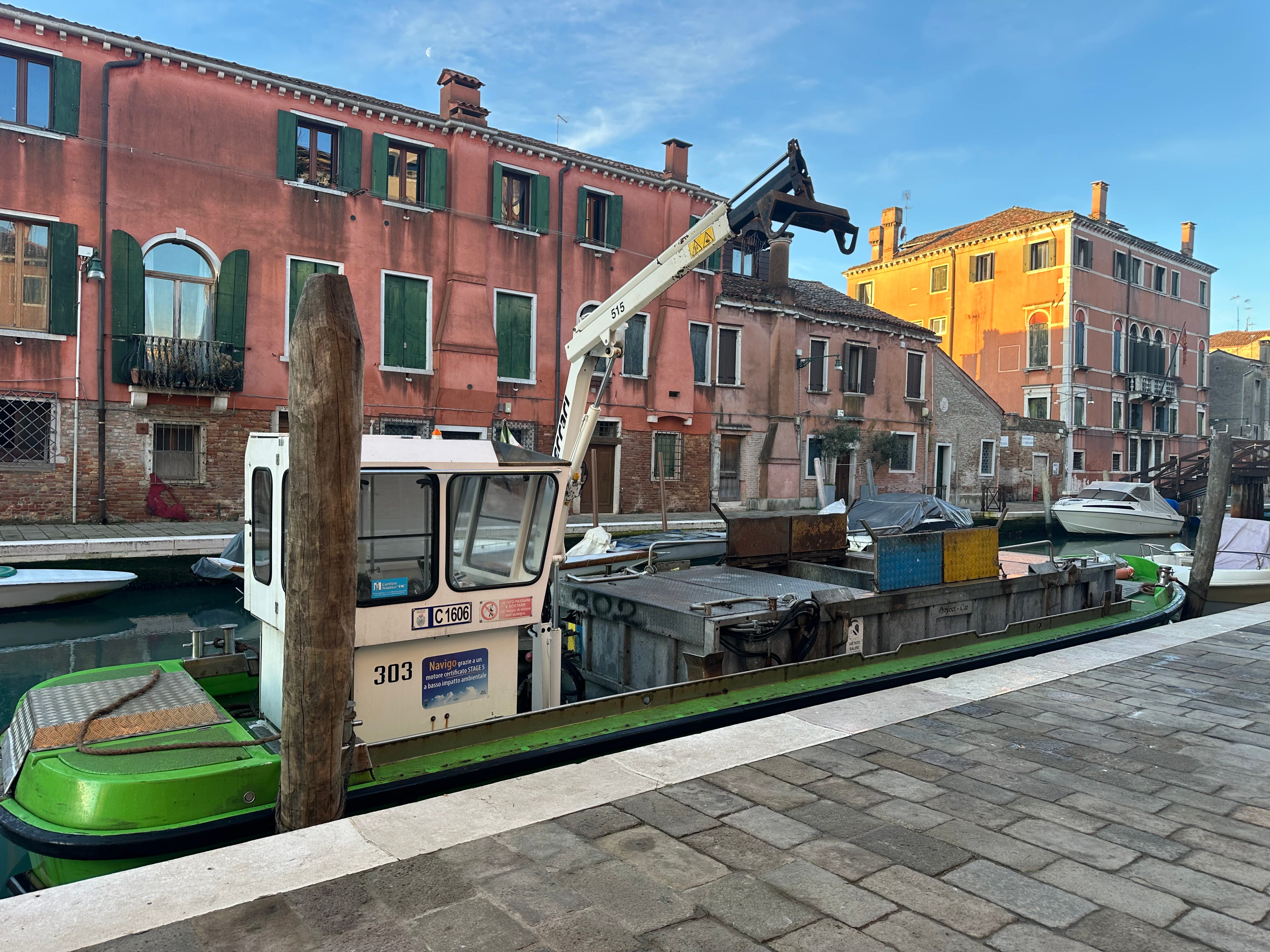
Cannaregio is a bafflingly “real” place on the northwest edge of the island. You’re just by the train station, yet you get to share your mornings with workmen unloading their boats, locals walking their dogs, and parents wheeling their young children to school on miniature scooters (so many miniature scooters!). What’s more, lots of the most interesting food and wine places are in this area, including several I mention below.
Although much of your sightseeing will likely take you out of Cannaregio, make sure you make time to wander its quiet streets and imagine what it would be like to live in—on—this speculative-fiction Atlantis.
Best breakfast
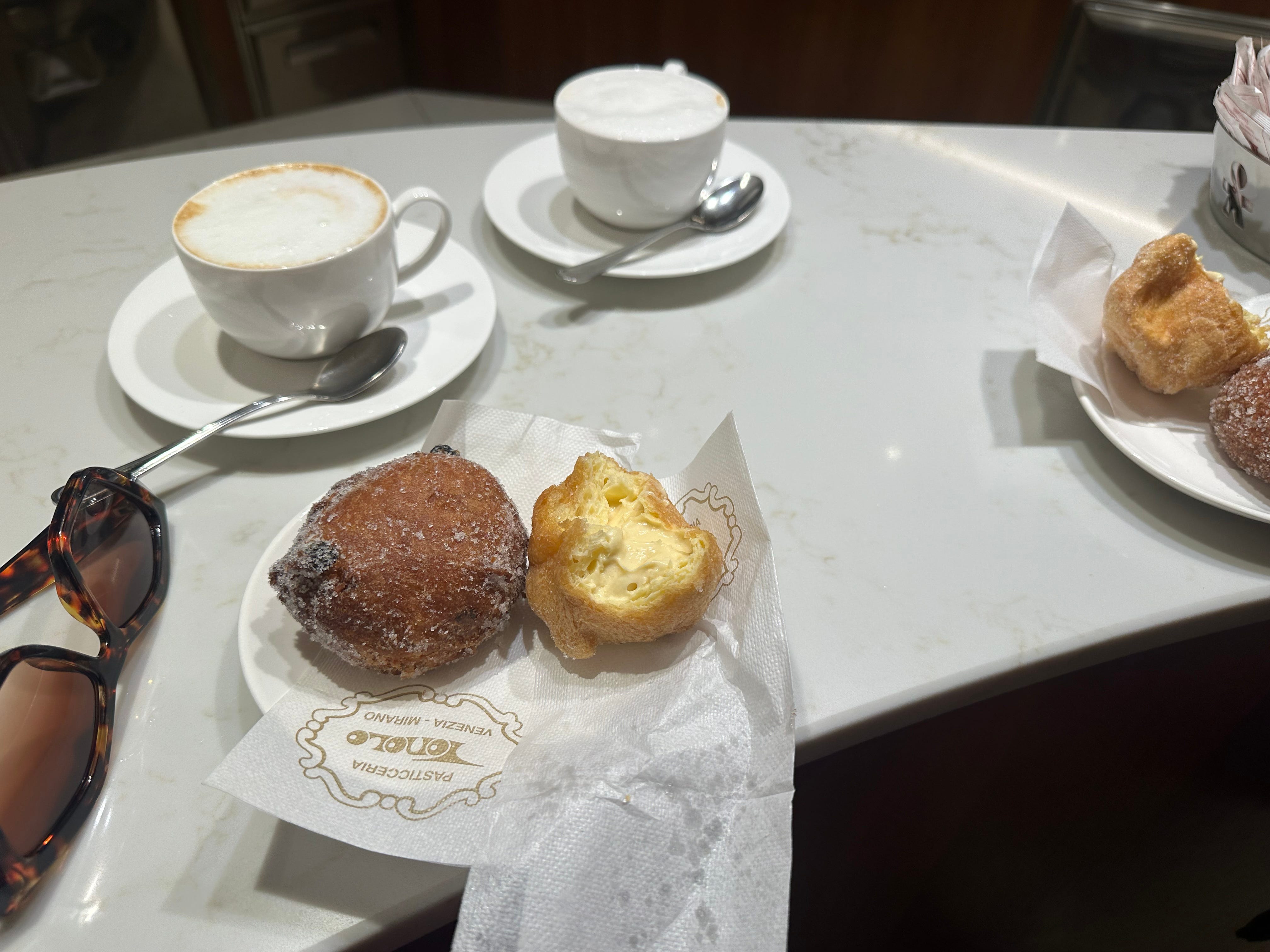
Tonolo, hands-down. Curiously, this pasticceria only serves its heavenly frìtołe (oh-so-moist round doughnuts rolled in sugar) around carnival time. Ignoring the unnecessarily brusque service (as you must always), we had these for breakfast every morning, paired with a cappuccino sipped at the counter. The classic frittella veneziana, its lemon-and-liqueur-perfumed dough studded with raisins and apple, was the favourite, closely followed by a rather boozy zabaione-filled version. Everything else looked good too, but most Italianishly, we didn’t feel the need to experiment.
Best hack
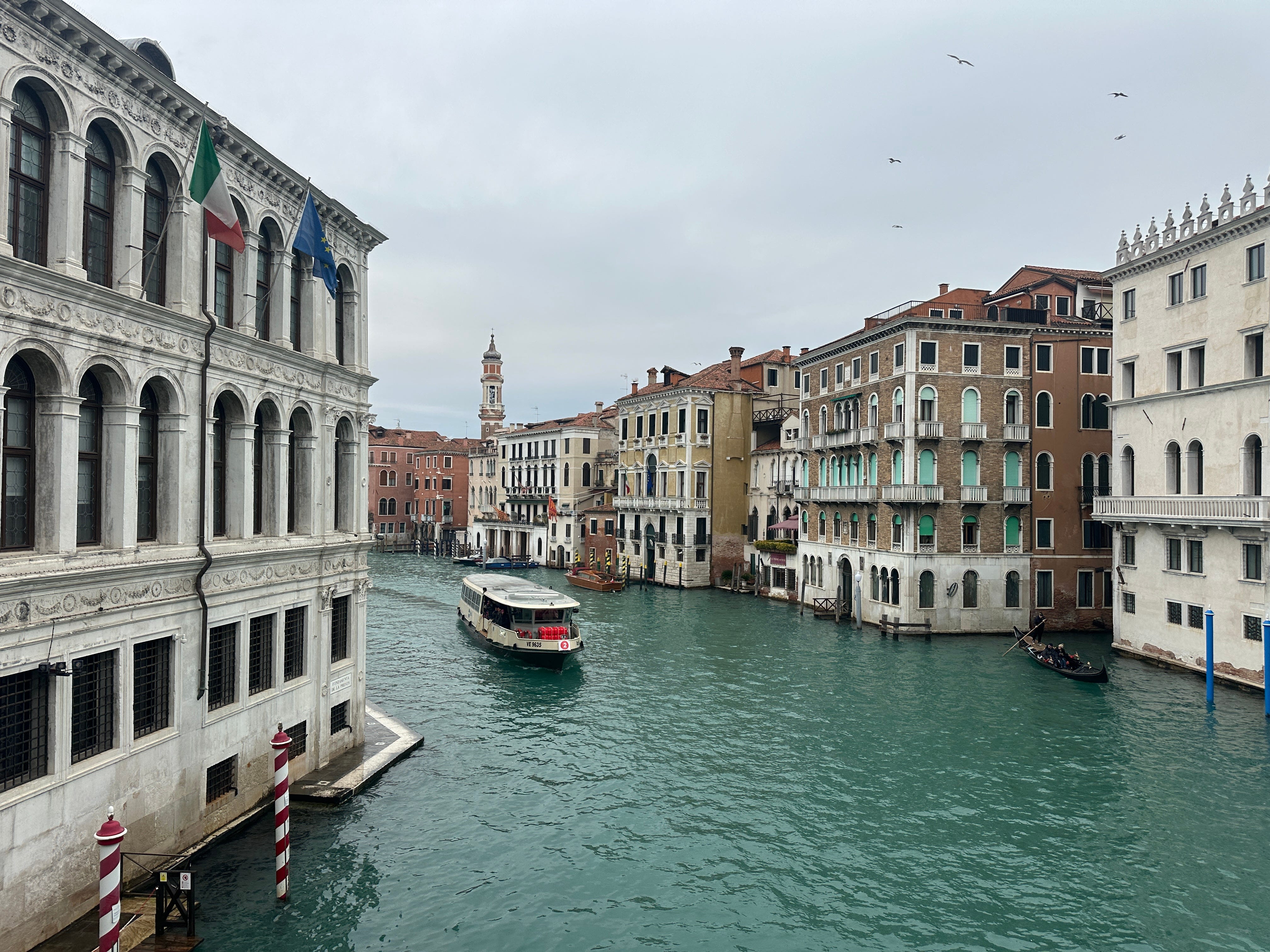
If you are under 30 and only in Venice for a long weekend, get the Rolling Venice + 72h ACTV deal, which gets you three days of unlimited public transport—usually 45€ for non-residents—for 33€. Nota bene: they don’t tell you this, but to get access to your ticket, you’ll have to take your email booking code to a ticket machine and print out the physical ticket. That’s what you then use to tap onto each vaporetto.

Best off-the-beaten-track activity
Use your transport ticket to get you all the way out to Torcello, a 40-minute ride across the lagoon. This little island is where the city of Venice is said to have originated. Apparently, it gets pretty busy in the summer, but it was essentially deserted when we were there.
Most interesting of Torcello’s handful of buildings is the Basilica of Santa Maria Assunta, consecrated in 639, with its Byzantine-style mosaic covering almost the entire inside of the west wall. Grab an entertaining but useless audioguide from the cat—sorry, woman obscured by a cat—manning the stand in the corner, sit down on one of the helpfully provided chairs, and marvel at the uncanny golden splendor.
As we retraced the water-lined path from the basilica to the vaporetto stop at the other side of the island, we passed pheasants frolicking in orchards perched on carefully tended squares of reclaimed land—little bits of paradise just floating over the surface of the lagoon.
Best thing to read about while you wait for the vaporetto
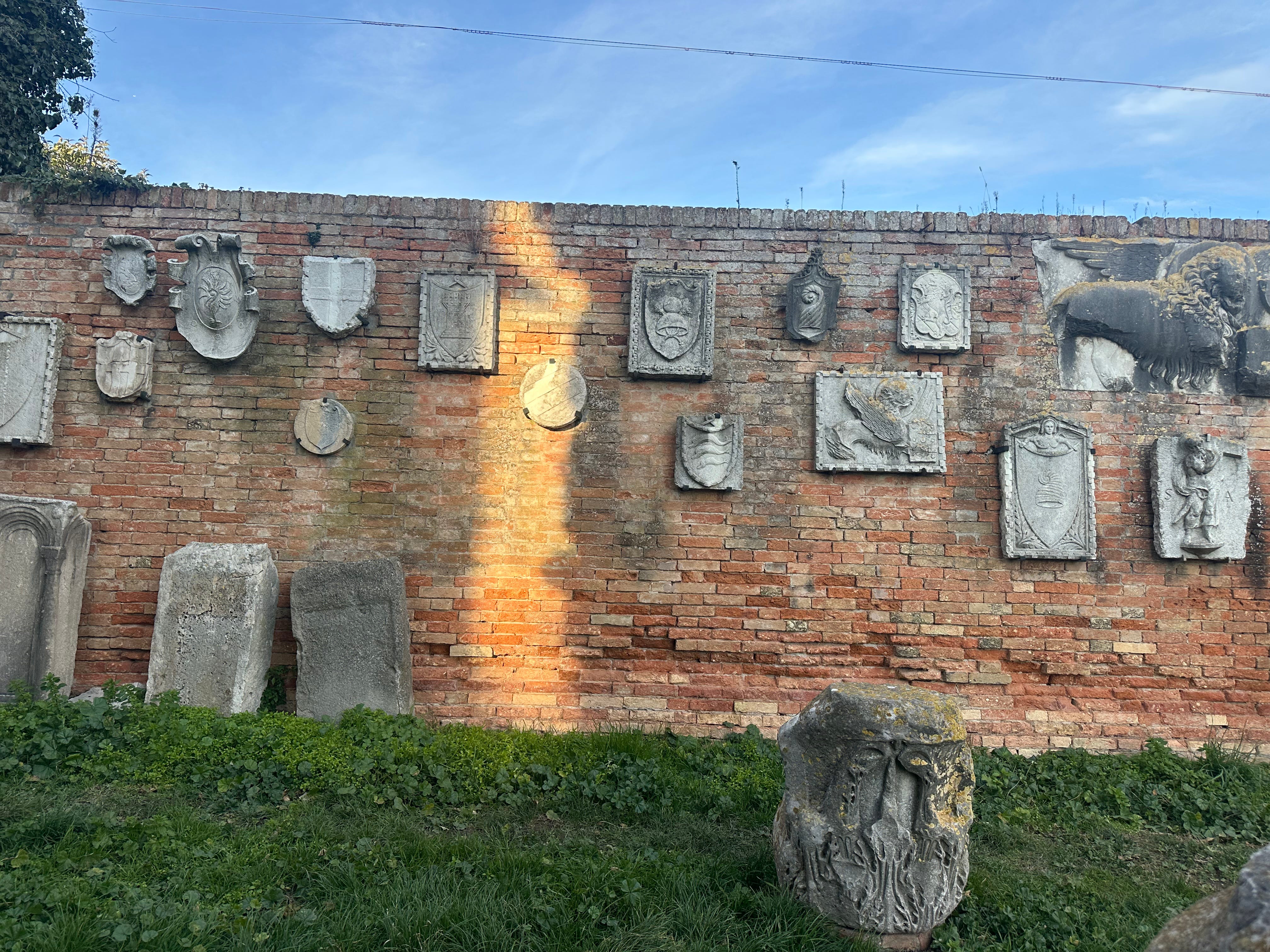
Like almost every Italian region, Venice has its own language (more than a dialect). In my non-expert opinion, its most characteristic features are a clipped feel to some words, a Spanish tint to others, and a generally lilting cadence. I saw less of it in Venice than I do of minority languages elsewhere—perhaps because of a desire to keep some parts of Venice for the Venetians?
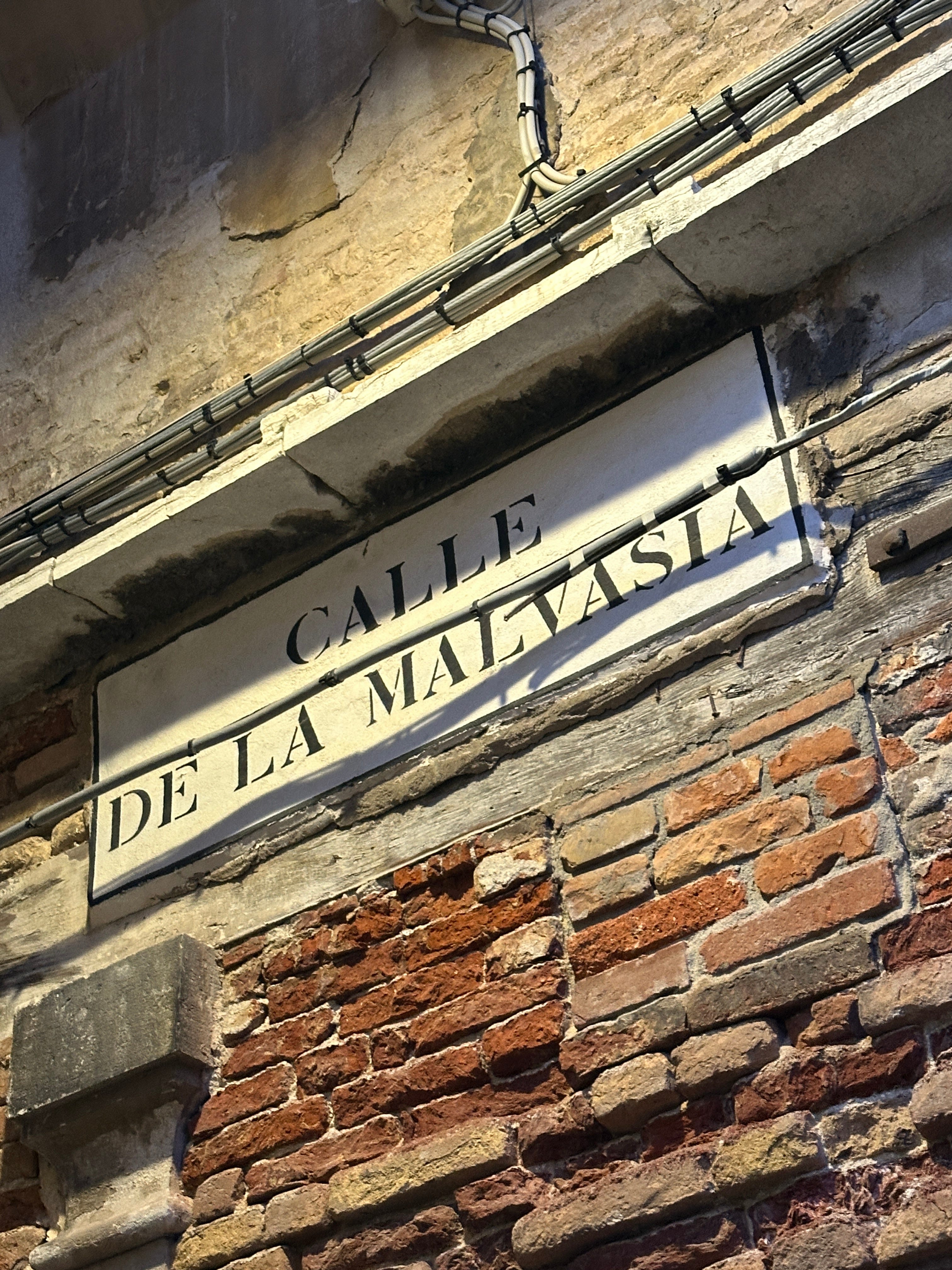
Still, you can find the traces of Venetian if you know where to look. Many streets are called calle (from the Latin for “path”), and many restaurants are Ca’ something or other—an abbreviation of casa, in this case meaning a historic house or palace. Finally, you’ll often see bigolo, the Venetian word for spaghetti, on menus. I made a treasure-hunt of it!
Best shop to browse
We happened upon Paolo Olbi’s shop, just across from the university’s main courtyard, by chance. His workshop produces letterpress-printed papers and leathers and uses them to bind notebooks, photo albums, folders, and other stationery and gift items, all with beautiful Venetian-inspired designs in striking primary colors.
When we popped our heads into the shop, which was technically closed at the time, Paolo graciously welcomed us in. When he heard we were from England, he told us with soft-spoken pride about how he used to receive commissions from the likes of Harrods and Fortnum & Mason. You know the kind of pseudo-old notebooks that are for sale everywhere in touristy places in Italy? This is the real deal.
Best piece of architecture not to miss
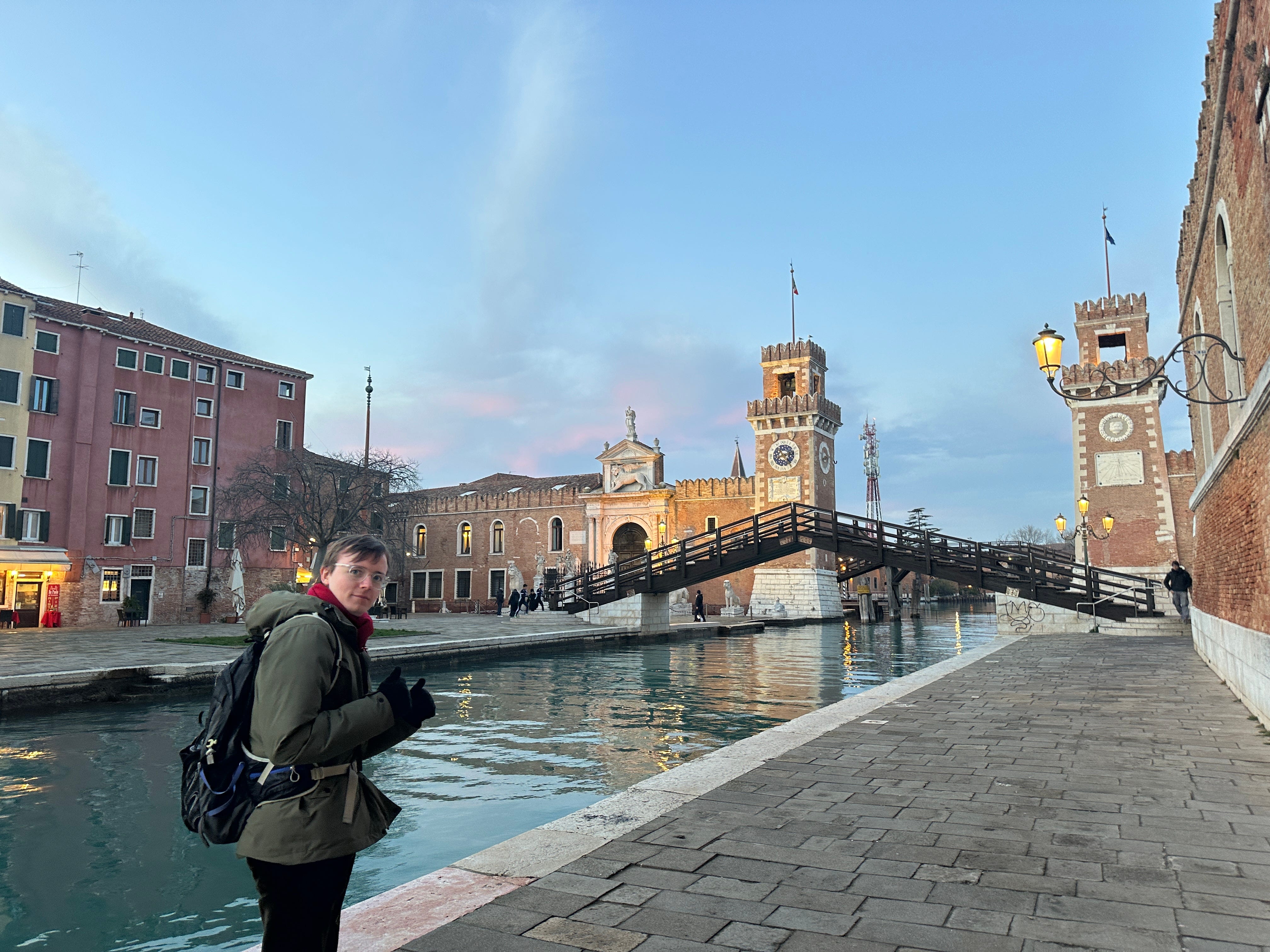
There are many stunning and extremely famous architectural ensembles to be admired in Venice, so I’ll list one we almost missed instead. The Venice Arsenale, clustered around the eastern tip of the city, is a medieval-to-early modern industrial site on a huge scale. Where once the mighty Venetian Republic’s warships were built, art exhibits for the Biennale are now housed. Outside of Biennale season, you can admire the rather whimsical entrance to the arsenal with its double towers and many, many lions, just off the lagoon between the bridges of Purgatorio and Paradiso.
Best cicchetti
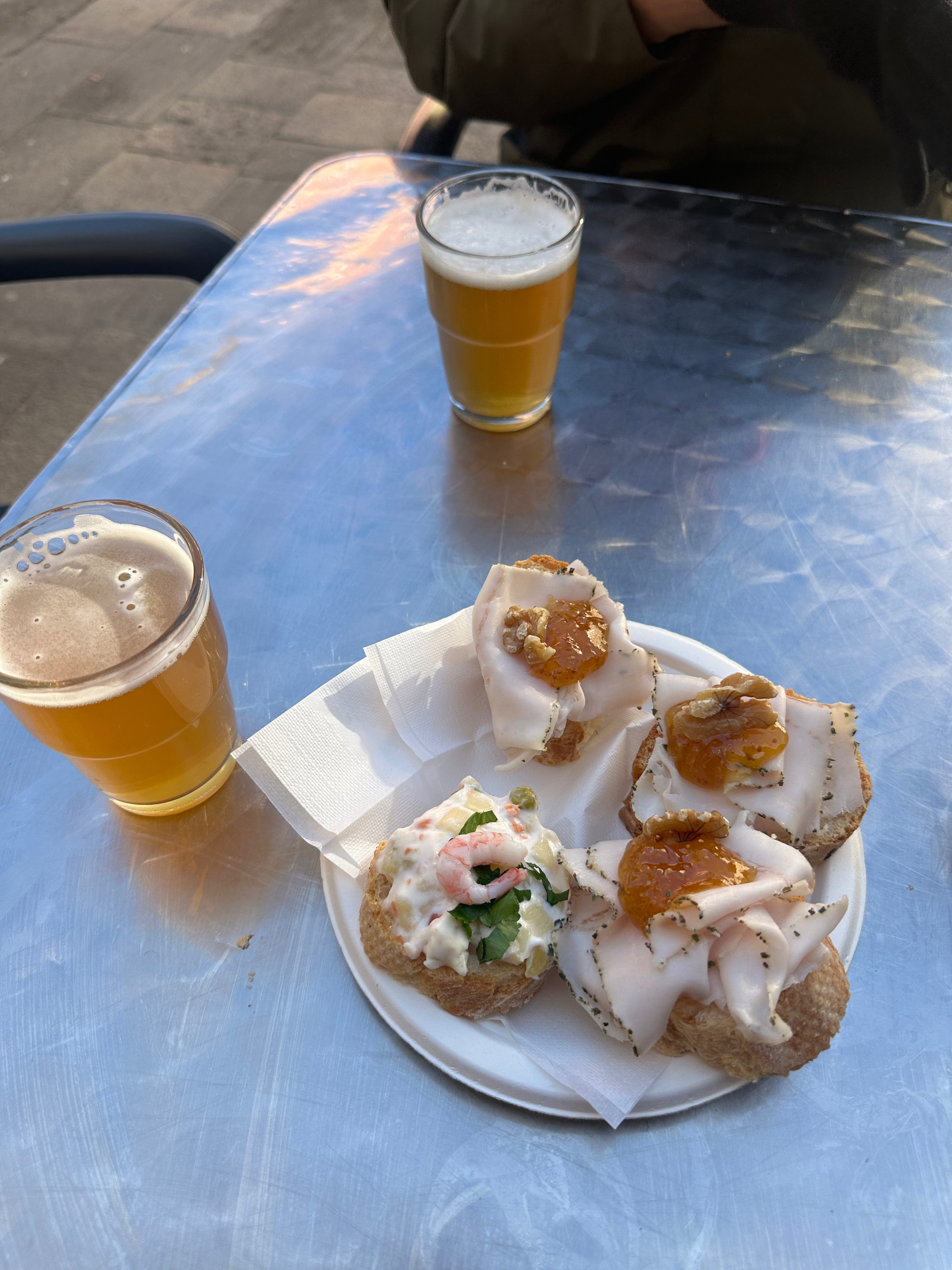
Cicchetti, little bread-mounted snacks rather like Basque pintxos, are obligatory with a drink in Venice. The little cicchetto with lardo, fig jam, and walnuts I had at Arcicchetti Bakaro has been living in my head rent-free. Yes, the sparkling wine we had with it—the only wine on offer—was indistinguishable from knock-off Appletiser, but it’s not about that: it’s about the glorious spread of 1€ (!) cicchetti before you as you crowd around entrance to this teeny bar.
While you’re at it, look in at Bacareto da Lele next door, an equally reasonably priced establishment where they’re likely to ask, “Ferma o frizzante?” in response to your request for a white ombra. Venice’s predilection for sparkling wine was a delightful discovery; something I would have been too young to appreciate last time I was there.
Best natural wine
Venice is overflowing (ha) with opportunities to drink natural wine, but the accompanying service is not always friendly or helpful. Our most enjoyable experience was at Anice Stellato, where the staff humored our Italian, made us feel welcome even in a relatively empty restaurant, and recommended two of the most interesting wines we’d drunk for a long time.
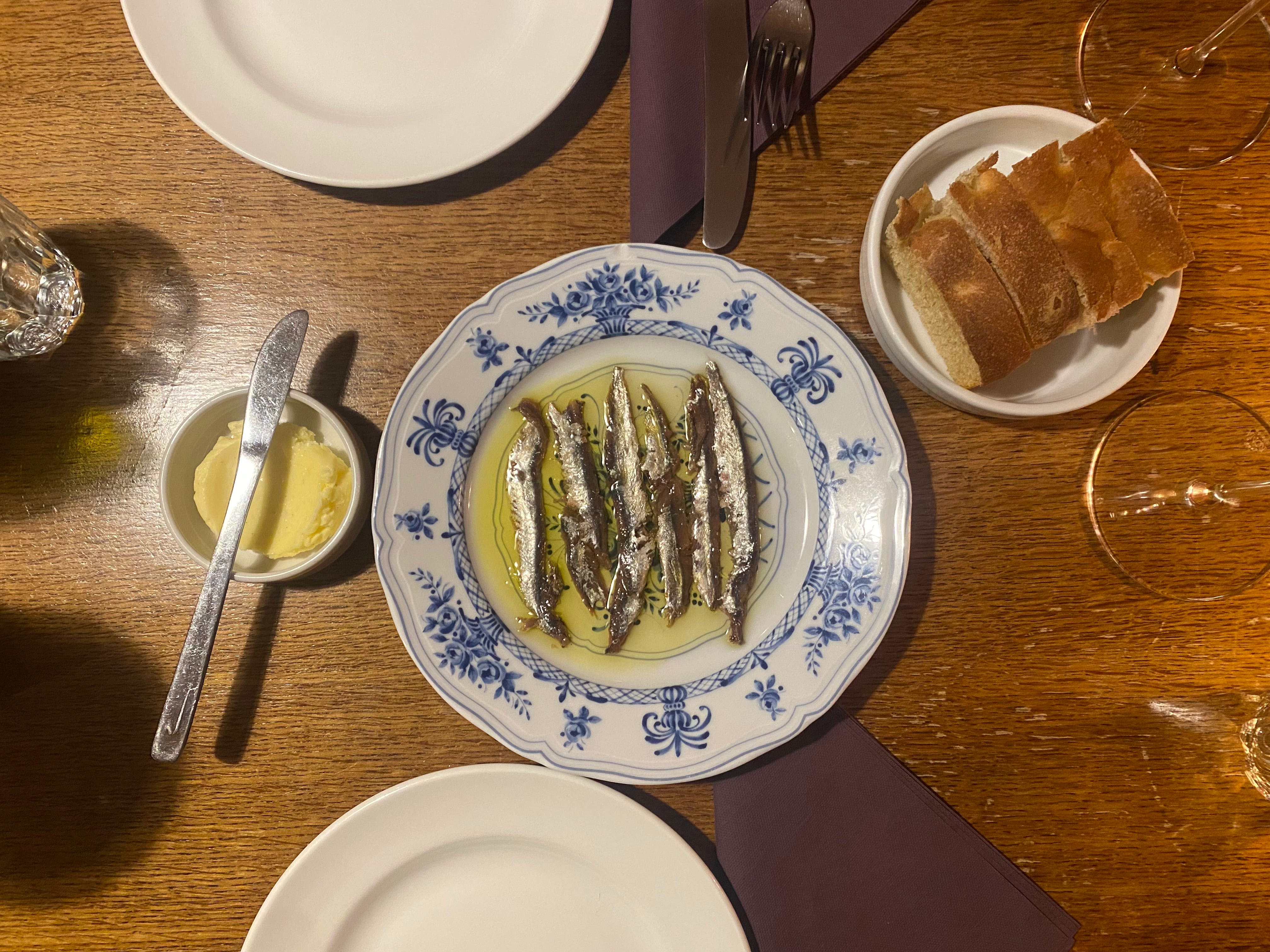
These wines were served in memorably delicate and expensive-seeming glasses—a nice touch in these settings—and they paired beautifully with the carefully considered small plates (e.g. the fancy anchovies with vanilla butter pictured below). There are quite a few similar places in Cannaregio, but I recommend checking this one out.
Best place for a drink that isn’t natural wine
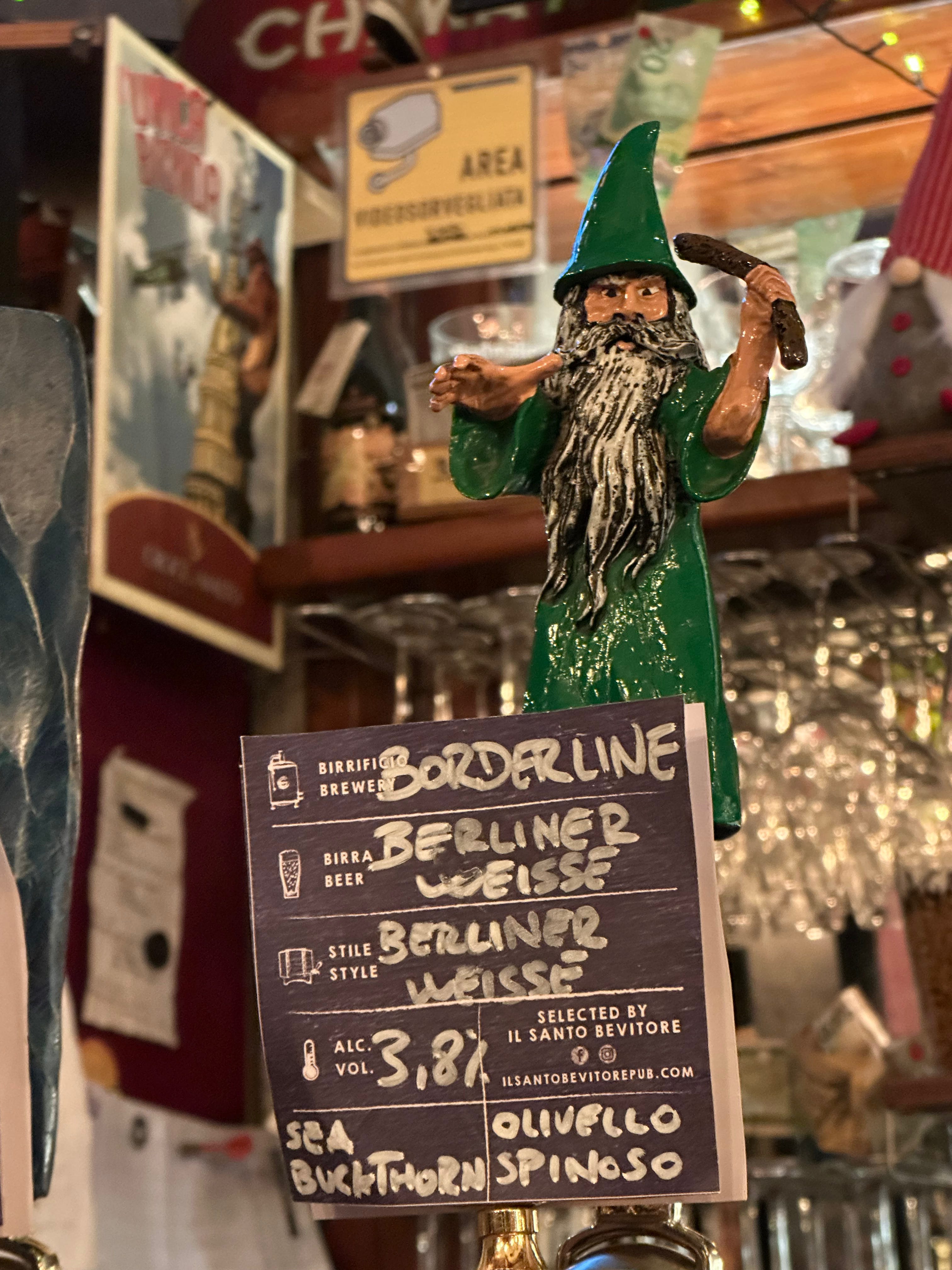
We had a great time at Il Santo Bevitore, one of the most pub-like Italian craft beer bars I’ve come across. This impression is probably largely due to the amount of British paraphernalia and warm wood in the space. Of course, I’d like anywhere with a sea buckthorn Berliner Weisse on tap—Alfie went for one of the several English ales.
With your more or less esoteric beverage, I recommend the carne secca: this bar snack is like beef jerky’s more succulent, spicier, porkier cousin, and is here served to you in pleasingly rustic stick form (“Uno stick pork, grazie”).
Best dinner (to book ahead)
I can’t remember how I found Osteria al Cicheto. Perhaps it was the Raisin app, as you’d certainly never stumble on it by accident. Tucked down a tiny side street near Santa Lucia station, it’s a very Slow Food osteria vibe (although I’m not sure it’s on the list). Make a booking a few days in advance, as the dining space is petite, and relish the opportunity to ask the waiter what almost everything on the menu is—my menu Italian is pretty good, but everything here was written in more-or-less inscrutable dialect.
The osteria’s fritto misto, a Venetian staple, was particularly yummy, with spheres of fried baccalà mantecato that make my mouth water just thinking about them. Courses are small, but the price for several of them (it’s a 2-per-person minimum at dinner) is rendered reasonable by Venetian standards by the set menu approach. What I want to know is how you get a seat at one of the wine-themed dinners whose menus were plastered all over the walls: we spent most of our meal reading through them, and each sounded delectable.
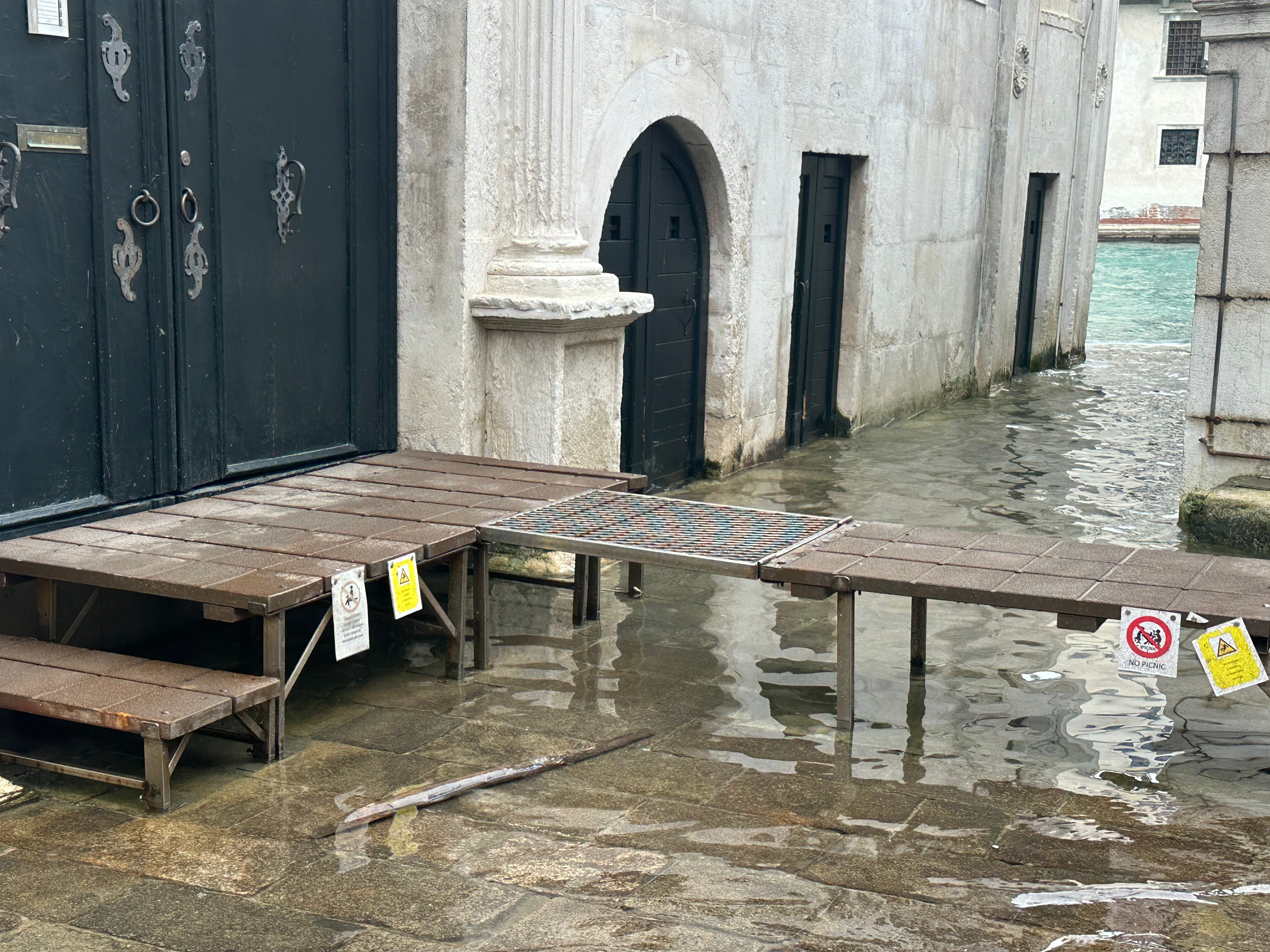
All of this is to say: most of the joy of Venice is in the wandering, whether on foot or via vaporetto, but having a few excellent places on your list to duck into when the cold or the crowds overwhelm is useful. When I go back (maybe next January!), I’ll be able to rely on the above to intersperse among my wanderings, although I would also like to add several things to the list—best gelato, best coffee. Oh, and I might bring yet another layer.